• Skip to main content
  • Skip to primary sidebar

The Mija Chronicles

Mexican food and culture, on both sides of the border

Puebla

Day of the Dead altars in Atlixco and Huaquechula, Puebla

November 4, 2013 by Lesley Tellez

A flower carpet, shaped with Day of the Dead skeletons, in Atlixco, Puebla. Photo by me.

A flower carpet shaped with Day of the Dead skeletons in Atlixco, Puebla. Photo taken by me on Nov. 1, 2013.

Due to a quirk in my travel schedule, I was able to spend this year’s Day of the Dead in Mexico.

My friend Rebecca organized an excursion to Huaquechula and Atlixco, two towns not too far from Puebla city. Rebecca had gone to Huaquechula a few years earlier, and she’d had the kind of experience that you’d hope to have on an intimate holiday like Day of the Dead. Locals had invited her into their homes to view their altars, and to eat and drink a little something. Festival organizers had created a map of the neighborhood, so visitors could walk from house to house and peek in open doors. Somehow the place wasn’t overrun by tourists.

The Huaquechula festivities didn’t start this year until at least 2 p.m., so beforehand we stopped in Atlixco, a pretty, quaint city known for its flowers.

Here are some photos from the day.

The altar dedicated to the Atlixco police department.

An altar built by the Atlixco police department.

An altar built by Atlixco students, featuring lots of fruit, bread, and a mirror, and crowned by a crucifix.

An altar built by Atlixco students, featuring lots of fruit, bread, and a mirror, and crowned by a crucifix.

This Atlixco altar has a few more savory items -- notice the nopal and chayote on the bottom level.

This Atlixco altar has a few more savory items — notice the nopal and chayote on the bottom level.

Traditional candied pumpkin (calabaza en tacha) with crystallized fruit, at the Atlixco market.

Traditional candied pumpkin (calabaza en tacha) with crystallized fruit, at the Atlixco market.

The bottom of an altar inside the church in Huaquechula, Puebla.

The bottom of an altar inside the church in Huaquechula, Puebla.

An altar in Huaquechula, dedicated to a loved one who passed several years ago.

A home altar in Huaquechula, dedicated to a loved one who passed several years ago.

An altar in Huaquechula, Puebla. The pretzel-shaped bread is a common theme.

The Huaquechula altars for loved ones who’ve died in the past year can envelope the wall of an entire room, from floor to ceiling. Pretzel-shaped bread is a common theme; one local person said they’re meant to mimic skulls.

Another altar in Huaquechula, Puebla.

An altar in Huaquechula, Puebla.

An altar dedicated to one or two young men who've died.

An altar dedicated to two young men who’ve died.

Neighbors sprinkle cempasúchil petals to their front doors in Huaquechula, to denote whether there's an altar inside.

Cempasúchil petals sprinkled from the street to front doors indicate that there’s an altar inside.

Rebecca said Huaquechula’s festivities had grown considerably from the last time she visited. I admit I wasn’t as interested in sitting around the center of town, which had carnival games, blaring music, food stands, and huge cups of beer edged in chile salt.

The neatest part of the day was wandering the empty streets and greeting everyone with a cheerful “buenas tardes.” And of course seeing the amount of beauty and detail that families had put into their altars, and the warmth they extended to strangers.

Hope you had a meaningful Day of the Dead celebration this year, too.

Filed Under: Day of the Dead, Travel Tagged With: Day of the Dead, Puebla

Quick chipotle salsa in Puebla York

May 3, 2013 by Lesley Tellez

Chipotle salsa

Since moving to New York, Crayton and I have suffered from intense salsa deprivation.

It took me awhile to start making my own because I kept looking for chile de árbol, the go-to red table salsa ingredient in Mexico City. But the chiles de árbol in Queens always looked stemless and old and sad. The best-looking dried chile in New York, hands down, is the chipotle — a fact no doubt tied to the large numbers of Poblano immigrants who live here. (Qué viva Puebla York!)

The chipotle is hugely popular in Puebla. It’s served in salsa with tacos árabes, and made into sweet-and-spicy rajas that are then slathered on tortas. Fondas serve little bowls of chipotle en escabeche to accompany any meal. The chipotle is a dried jalapeño that’s been smoked using mesquite, and actually the smoking technique was developed in Puebla in prehispanic times, says Alonso Hernández, the chef at Puebla’s well-known Mesón Sacristía restaurant and an intense researcher of Mexican food. The jalapeño itself is native to Veracruz.

The chipotle is spicier than an ancho or guajillo and measures about two inches long, with blackberry-colored skin. In New York they’re often sold loose in the produce section of the supermarket. Whole Foods in Midtown East carries them (I bought four for 30 cents), and so does Met Food in Jackson Heights on 37th Ave. The Mexican bodegas I’ve visited in Corona and Elmhurst tend to offer huge bags of them, which works if you’ve got space to store them.

Making this salsa — a fresh salsa that requires no charring or boiling — takes about 10 minutes, if you don’t count the part where the chiles are soaking in water. For this batch, I seeded the chiles (you don’t have to, if you want more heat), then soaked them, then zapped them in the blender with two very ripe tomatoes and a small amount of onion and garlic.

The result was smoky and garlicky and tart, and, after the addition of some salt, wholly excellent with the homemade spinach empanadas I’d made. (Is it possible that the salsa overshadowed the empanadas? Totally.)

I’ve heard lots of people already complain about finding good Mexican food in New York, but it’s possible to make your own at home, using ingredients you can find at most grocery stores. If the Poblano Yorkers can do it, you can, too.

Quick Chipotle Salsa

Chipotle salsa

Note: What’s known as the chipotle in New York is often called a mora in Mexico City. The rougher, leathery chipotle meco is a little harder to find at the bigger supermarkets here, but you can get it at the smaller bodegas at the edge of Jackson Heights and in Corona. If you use the meco, the salsa won’t be as hot — Hernández says the meco is actually boiled first before it’s smoked, which removes some of the heat.

This salsa keeps in an airtight container for at least 5 days.

Ingredients

4 chipotle chiles (see note)

1 heaping tablespoon diced onion

1 garlic clove, roughly chopped

2 small tomatoes, cut into quarters (I used hothouse tomatoes, similar to the ones seen here)

1/2 teaspoon plus one pinch salt

Directions

1. Using kitchen shears or a knife, make an incision in each chipotle and scoop out the seeds. Fill a small bowl with hot water and add chiles. Let soak for 15 minutes, until skin is plump and pulpy. Once the chiles are fully hydrated, don’t discard your chile water just yet, in case you might need it later.

2. Chop chiles roughly. Place onion, garlic and chopped chiles in a blender jar and pulse a few times. Add half of tomatoes and pulse once or twice. Then add the remaining tomatoes and pulse again a few times, until salsa is a little smoother, but still with some texture. (If you over-blend it’s not the end of the world.) If you like your salsa thinner, now is the time to add in a tablespoon of that chile water you saved.

3. Pour salsa into a bowl and taste, just so you have an idea of what this tastes like without salt. Then add your salt to taste — I thought it was perfect with 1/2 teaspoon plus a pinch. Serve immediately.

Filed Under: Recipes Tagged With: dried chiles, Puebla, salsa

My favorite food moments of 2012

December 31, 2012 by Lesley Tellez

A tlayoyo — a rustic Poblano version of the DF tlacoyo, made with mashed alberjón beans and avocado leaves — was one of my favorite foods of 2012.

I’m grateful for so many things this year.

We saw a little bit more of the world. We had lively conversations with good friends and stared out at gorgeous vistas and sipped excellent wine. (And excellent mezcal.) I got to come back to a city that I love like no place else — fetid air, crushing traffic, raw chicken vendors who hoot at me and all — and I got to learn and share everything I know about Mexican food, a job that I still cannot believe is mine.

My family, thankfully, stayed healthy, and my husband did not complain when I had to work weekends, on vacation, or until 9 p.m. on a weeknight. (Thank you honey, and I promise not to make you visit any more markets if you don’t want to.) I’m also thankful for the vendors who said hi to me when I was walking down the street, and for the stoic tlacoyo lady who prepared her last tlacoyo of the day for me, for free — “Un regalo de navidad,” she said. I’m thankful for the roof over our head and the abundance of food in our lives.

I really don’t know how I ended up with this life, but I am so glad it’s mine.

Here are some of my favorite food moments of the year:

1. The Tamales Course at Fundación Herdez. This four-day course was probably the best cooking class I’ve ever taken in Mexico City. The instructor gave an exhausting overview of tamales from prehispanic times to the present, and we supplemented our knowledge with a trip to the Botanic Garden at UNAM.

Grilled tamales at the Fundación Herdez cooking course in January, 2012

The filling for a grilled tamal: one small mojarra fish, a leaf of purple epazote, tomatillos and xoconostle slices.

2. Judging a small-town tamale fair. We arrived to Tetepango, Hidalgo thinking we’d peruse the tamales and atoles and that would be that. Instead we ended up judging more than 100 homemade tamales and atoles, in flavors like cajeta con whisky and bean maguey-worm. It was a blast.

A “tamalchil” — tamal with chile ancho — at the Tamales & Atoles Fair in Tetepango, Hidalgo.

Ben and I deep in thought. Was the masa too dry? Too dense? These were the questions we grappled with.

3. Making homemade tortillas at the Escuela de Gastronomía Mexicana. This was my second-favorite cooking class of the year. We made tortillas with guajillo chiles, and tortillas embedded with quelites. Mine inflated (ya me puedo casar), and I realized that a huge part of making good tortillas is a hot comal. I’m blaming my non-inflated tortilla failures at home on my stupid electric stove.

Homemade tortillas with quelites and guajillo chiles at the Escuela de Gastronomía Mexicana

4. Visiting the farmers of Xochimilco. I’d heard of De La Chinampa, a group that supplies organic, locally grown produce to restaurants and local residents in Mexico City. In March, I finally had a chance to see the chinampas up close during a trip with Ricardo Rodriguez, the organization’s director. We met a farmer, who explained his farming practices to us; then we floated around the most tranquil part of Xochimilco that I’ve seen.

Cilantro seedings, farmed in the chinampas of Xochimilco

The Xochimilco canals at sunset

5. Touring Queens with Madhur Jaffrey. In April, I was one of the few lucky ones who got to take an Indian food tour of Queens with Madhur Jaffrey, part of an event with the International Association of Culinary Professionals. Ms. Jaffrey was gracious and kind, and she taught us the history and preparation of every food we tried. This ranks in my top food experiences ever.

One of my favorite things was chaat, a cold-spicy-sour-sweet salad that’s eaten as a snack.

6. Puebla’s International Mole Festival. In May I tasted some of the best foods in the state of Puebla — moles, molotes, tlayoyos and more — and listened to Rick Bayless, Marcela Valladolid, Mark Bittman and others share their personal experiences with mole and Mexican food. Completely worth the journey there and back, and I’m already looking forward to the festival again next year.

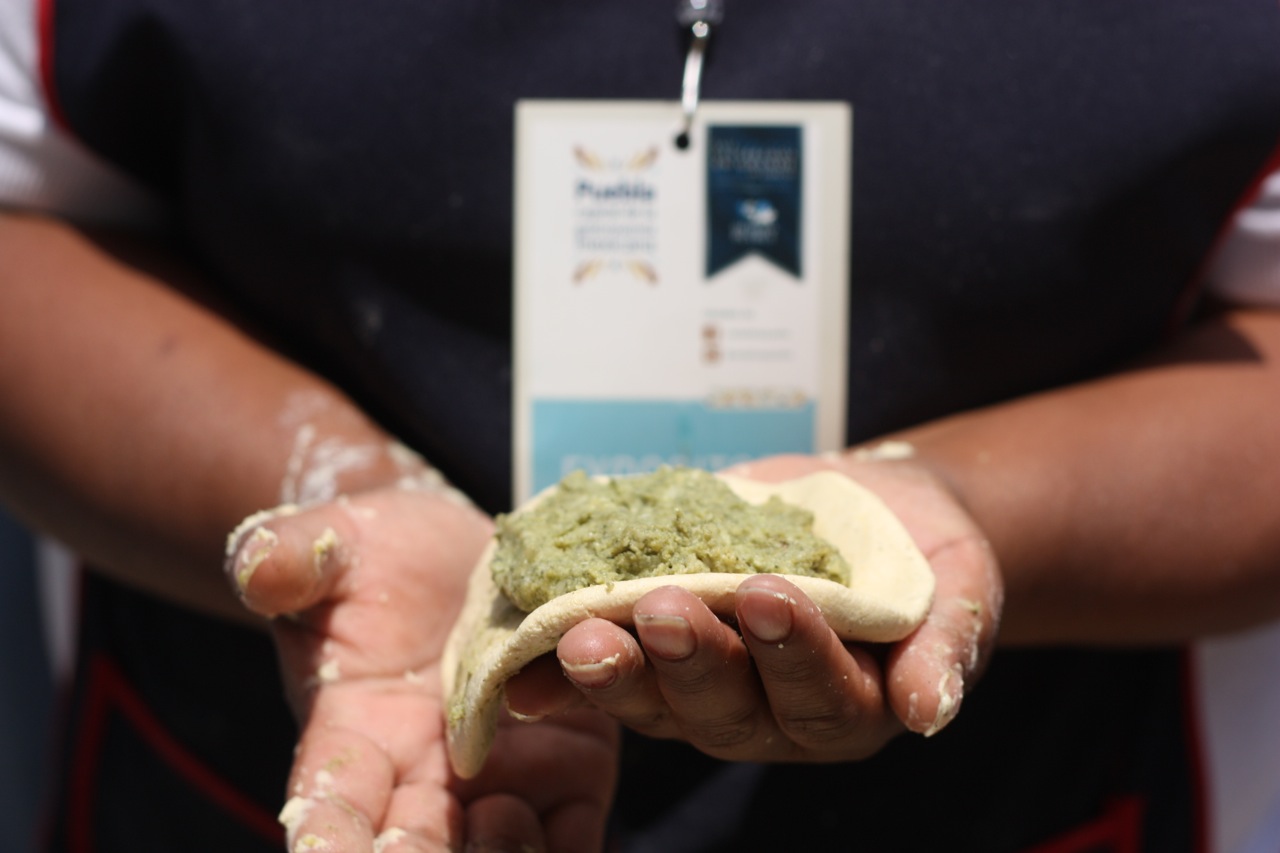
Spooning chilayo onto a molote. Chilayo is made with sesame seeds, white beans and red jalapeños.

7.The joy of Oaxacan tamales. I thought I had tasted tamales before I went to Oaxaca. Let’s be clear: I had not tasted tamales. These tamales have ruined me on all other tamales, now and into the future. Every time I make tamales, I know they will not be as good as the Oaxacan ones, and that is the cross I have to bear.

A bean tamal with hoja santa in Etla, Oaxaca

8. Burning a tortilla on an outdoor stove, for homemade mole. During the same June trip to Oaxaca, I took a cooking class with Susana Trilling. I volunteered to make the chichilo mole (no one else wanted to do it), which entailed burning a whole tortilla on the clay comal and then adding the ash to the stew. Can I tell you how fun this was?

Burning a tortilla for chichilo mole

The tortilla’s on fire, the tortilla’s on fire!

9. Roast suckling pig in Mealhada, Portugal. When we were in Portugal in July, Crayton insisted (yes, Crayton!) on taking a side trip to Mealhada, also known as roast suckling pig central. We got lost on the way there, so we had to pull over and ask for directions in Crayton’s Brazilian-style Portuguese. Eventually we found Pedro Dos Leitoes, a huge restaurant with skewers of pigs roasting in the front lobby. We gobbled down an entire lechón with the crispest skin, plus potato chips, salad, bread, olives and dry, fizzy white wine.

Lechón (roast suckling pig) at Pedro dos Leitoes in Mealhada, Portugal

10. A long weekend in Coatzacoalcos, Veracruz. So what if the city is feíto? The food is fantastic, and I’d love to go back. I had the best time touring the markets with my friend Janneth and her mom, Martha. We stopped at little restaurants and I helped make homemade tamales de masa colada.

Camarones enchipotlados (shrimp in chipotle sauce) outside Coatzacoalcos, Veracruz

11. A food tour of Tijuana. I’m going to write about this soon — hey, it barely happened in October (wince) — but Crayton and I had the pleasure of taking a food tour with Bill Esparza, a blogger and Mexican food expert who lives in LA. Of the places he showed us, my favorite was Mariscos Ruben. The goopy, creamy taco de marlin still lives on in my dreams.

A taco de marlin from Mariscos Ruben in Tijuana, Mexico

12. My first homemade chile en nogada. In hopes of channeling the 19th-century Poblana nuns who invented this dish, I went to Puebla to buy my ingredients and I peeled walnuts for six hours. When it came time to fry the chiles, curls of smoke wafted out of my kitchen and floated over my guests’ heads. In the end — the chile was spectacular.

I forgot one more thing that I’m thankful for: you reading this blog, and commenting (or not), and generally making The Mija Chronicles a lovely place to be. I wish you a wonderful New Year, and hope you get a few moments of reflection before all the craziness begins.

Un abrazote a todos!

Filed Under: Reflections, Streets & Markets Tagged With: Oaxaca, Puebla, tacos, tamales, Veracruz

Homemade chiles en nogada

October 2, 2012 by Lesley Tellez

After taking two chiles en nogada cooking classes, I finally decided the time had come to make the dish in my own house. This was sort of an insane decision because I was working and traveling too much. And because, amid all that, I decided to go to Puebla to buy my ingredients.

The fruit in Mexico City was not satisfying. The stone fruits came from the States — ni lo piensas en un plato tan mexicano — and the Chihuahua apples looked a little miserable. So I carved out a few days and bought a bus ticket. At the Mercado La Acocota, I bought two kilos each of local peaches, starchy, crunchy apples from Zacatlán and sweet pears. I also bought 16 chiles poblanos.

The day before the shindig, with walnuts to peel and some last-minute work to take care of, my daylight cooking hours ran out. Which is why I found myself at 7 p.m. starting to prep an endless mise-en-place. At 10 p.m., the picadillo finally went into the pot.

My endless mise en place: chopped pork and beef, apples, pears, peaches, fresh-ground cinnamon and homemade roasted tomato sauce, among other items.

The next day — the day of the party — I woke up at 7:30 and peeled walnuts for three hours. (Crayton was sleeping most of that time or else he would’ve been shaking his head at me.) Then I charred my chiles and rubbed off the skin, and tried the best I could to remove the seeds without tearing apart the chile flesh.

My guests had started to arrive around 3 p.m. and a few asked if I needed help. (“No,” I croaked.) The only one I let into the kitchen was Ruth. She stuffed the chiles and dusted them in flour and generally made me feel like I wasn’t drowning in chile skin, seeds, eggs, and warming bowls of beans and rice.

Stuffed chiles, waiting to be dusted with flour

Finally, finally, it was time for the capeado, the frothy egg batter in which we’d dunk the chiles. My friend Carlos wandered into the kitchen and said, “You’re going to do the capeado?” Not everyone does, because the capeado is fattening and complicated. But I sniffed. Of course I’d do the capeado. The capeado respected the original 19th-century recipe.

After probably four chiles, it was hot and smoky and oily in the kitchen, and the smoke had drifted out into the living room. I didn’t care. I was channeling the nuns!

Frying up chiles en nogada, hot and sweaty kitchen be damned.

I didn’t get a photo of the chiles all gorgeous and golden-brown, but I did snap a quick photo of them blanketed in walnut sauce on the plate, before we devoured them all. My friend Daniela told me after one bite that I should open a restaurant.

The walnut sauce, as an addendum, was stunning. The nuns would’ve been proud.

Chiles en Nogada
Makes enough for 12 chiles

A few notes here: You’ll notice I used chopped meat, not ground beef or pork — I like the flavor better when the meat is chopped, plus it’s supposedly more accurate to the original recipe. I also did not use acitrón, the candied biznaga catcus that is typically used in chiles en nogada, because it is overharvested.

On the cooking time for the picadillo, I’ve heard about some folks who cook it for six or eight hours, making it a slow-roasted braise type of thing. I didn’t do that here, but I’d like to try it someday. In both of the classes I took, the picadillo cooked for about 30 minutes.

Lastly, I know I’m a snob about the capeado, but you don’t have to do that step if you don’t want to. To prepare the chiles without the capeado, I would warm them slightly in the oven and then top them directly with the nogada sauce. (Be warned that the sauce will not pool in a pretty pile on top, but fall off the sides.) The dish is traditionally served lukewarm or room temperature.

For the picadillo (the filling):
1 to 2 tablespoons lard
1 medium onion, chopped
2 garlic cloves, minced
12 oz/350g pork loin, chopped
12 oz/350g beef rump roast, chopped
1 lb./500g tomatoes, charred on a comal, liquified in a blender and strained
1/2 cup raisins
8 oz./233g peaches (about 6 small Mexican peaches), peeled, cored and chopped
9 oz./250g apples (about 4 small), peeled, cored and chopped
8 oz./240g “lechera” style Mexican pears, or any other pears you want, peeled, cored and chopped
1/2 cup sliced almonds
1/2 cup pine nuts
3 rings candied pineapple, chopped (this amounts to scant 3/4 cup)
1/4 teaspoon dried thyme
1/2 teaspoon Mexican oregano (I used oregano I bought in Oaxaca City)
3/4 teaspoon ground cinnamon
1/2 teaspoon ground clove
12 chiles poblanos
3/4 to 1 cup flour
Makes enough to fill 12 chiles, with extra relleno left over

For the capeado (egg batter) and the frying:
8 eggs, separated
pinch of salt
1 bottle vegetable oil or other cooking oil that doesn’t burn when heated to high heat

For the nogada (walnut sauce):
4 cups whole peeled walnuts, soaked in water or frozen to keep from turning brown
3.5oz/100g goat cheese
1/2 cup plus 2 tablespoons milk
2 tablespoon sherry
2 tablespoons sugar
Makes scant 1 liter

For the garnish:
1/2 cup whole or chopped parsley leaves
1 cup pomegranate seeds

Directions

1. To prepare the picadillo: Melt the lard in a skillet over medium heat. Add the onion and stir to coat in the lard. Cook until translucent, about 3 to 5 minutes. Add the garlic and stir constantly so it doesn’t burn, cooking until aromatic, about 30 seconds to a minute. Add the chopped meat and cook uncovered, stirring occasionally, until the meat changes color and has mostly cooked. Then pour in the tomato sauce and bring to a boil. Add raisins, fruit, spices, nuts, dried pineapple and spices, and a little salt to taste. Bring to another boil, then simmer for at least 30 minutes on low, keeping the pot covered. Taste for more salt. The picadillo can be prepared up to two days before and stored in the refrigerator, or even longer and frozen. I made mine the day before as to leave more time for stuffing/seeding/peeling chiles on the day of our meal.

Keep the picadillo warm while you’re finishing with the rest of the steps.

2. To char and seed the chiles: Char the poblano peppers over an open flame, a dry skillet or a comal. Wrap chiles in dish towels for about 20 minutes until the skin softens and is easier to peel. Working one chile at a time, remove the skin with the pads of your thumbs or a paper towel. Try not to scrape the skin off with your fingernails — not only does the skin gets under your nails, where it’s difficult to remove, but it mutes some of that yummy charred flavor. Also, do not rinse the chiles under water for the same reason! The chiles don’t need to be perfect. A few pieces of skin left over is okay.

After you skin the peppers, cut an incision in the chile (the thinnest/weakest part of the chile is usually best) from tip to end, leaving about an inch of space on either side so the filling doesn’t fall out. Then carefully remove the seeds, either using gloved hands or a small spoon. Try very hard not to scrape, or else you could end up dislodging a vein, and the chile will fall apart. Set all charred, peeled, and seeded chiles aside.

How to char chiles poblanos over an open flame

3. To stuff the chiles: Fill each chile with picadillo until they’re plump, but not impossible to close. The idea is that your filling will stay inside and NOT fall out while the chile is cooking. After filling all the chiles, dust them each in flour. Let them sit for a minute while you prepare the capeado.

3. For the capeado: If the beaten whites sit around for too long, they’ll fall, which destroys the texture of the capeado. So I’d start heating the oil to fry your chiles while you beat the whites. (This is especially helpful if you have an electric stove that takes forever to heat anything up, like I do.) I used a 10-inch skillet and about 1/2 cup of oil.

While the oil warms, beat the whites until they’re thick and fluffy and they stay in place even after you turn the bowl upside-down. Then, one by one, stir in the yolks, mixing just until the yolk is completely integrated. Hopefully by this time the oil is hot hot hot, so when you drop in a teensy piece of egg batter, it sizzles.

4. To fry the chiles: OJO: The chiles fry VERY quickly and they’ll burn if you don’t have a constant eye on them. So this is not a good time to go have a glass of wine, wash dishes, fiddle with the radio, etc.

Prepare a baking sheet lined with several layers of paper towels, and have a large cooking spoon and two spatulas at the ready. Hold one flour-dusted chile by its stem and upper edge and carefully dunk it into your bowl of egg batter. (Sometimes a scooping motion works best.) Then quickly place the chile in the hot pan of oil. It should bubble and sizzle immediately. Slather on a little extra egg batter on top so you no longer see any of the chile’s green skin.

Once the chile is completely swaddled in egg batter, use a spoon to bathe the chile in extra oil from the pan, until the chile turns a light golden-brown. This should take perhaps 10 seconds. Then use two spatulas — one for each side of the chile — to carefully turn the chile over, wrapping its eggy coat around itself, so it cooks on the other side. Cook for about 10 to 20 seconds more on the other side and remove to the paper-towel lined tray. Repeat with other chiles, adding more oil as needed. Let chiles rest while you prepare the sauce.

5. To prepare the nogada sauce: I did this in batches. Place 2 cups of walnuts in the blender jar with half the goat cheese, 1/4 cup milk and 1 tablespoon sugar. Blend on high, stopping a few times to stir and dislodge the walnut bits from the blender blades. Add one more tablespoon of milk or a little more if necessary. (You don’t want the sauce too watery or thin.) You could also add more sugar if you want the sauce sweeter — I like mine on the savory side. Finally, add 1 tablespoon of sherry and blend just a little more to combine. Pour into a receptacle and repeat with the other two cups of walnuts, and the rest of the goat cheese, sugar and sherry.

6. To serve: Place a chile on a plate. Ladle over the nogada sauce, until the chile is completely obscured. Sprinkle with parsley and pomegranate seeds. Serve at room temperature.

Filed Under: Recipes Tagged With: capeado, chiles en nogada, nuns, Puebla

The life of a mole pot in Puebla’s Barrio de la Luz

September 13, 2012 by Lesley Tellez

In Mexico, you can’t just use any old pot to make mole.

The best moles, it’s generally known, are scraped and mingled together in a clay pot, preferably one that fits an extra-large wooden spoon. The pots conduct heat well and the clay adds an extra touch of flavor. And in my foreign eyes, you cannot achieve the perfect mole moonscape without them.

A clay pot of bubbling mole, at Puebla’s International Mole Festival last May

In Puebla, the birthplace of mole poblano, many cooks buy their pots in the Barrio de La Luz, where artisans still make them almost entirely by hand. I learned about the the neighborhood during Puebla’s International Mole Festival last May. A video had been filmed in one of the barrio’s workshops and it traced the pot-making process almost from beginning to end — from soaking the dirt and kneading it, to firing it in an oven. Watching the video gave me chills.

(Here’s a link to the mole pot video — you really have to watch it.)

Last week when I was in Puebla to buy my chiles en nogada ingredients, I asked Rebecca if we could pop by the Barrio de La Luz to explore. We invited Alonso Hernandez of Mesón Sacristía to join us. He’s one of my favorite Puebla gastronomic historians and one of my favorite people in general.

We ventured out early one morning with Alonso leading the way. We stopped at a doorway clustered with glazed mole pots, and an older gentleman welcomed us as if it were common for strangers to show up unannounced. He led us down a hallway and into an open patio, where dozens of unvarnished and finished clay pots jugs lay in rows.

This was a group workspace. Each artisan had his own small room to create, and they shared an oven. Rebecca and Alonso and I peered into each doorway and tried not to bother anyone. One man was making an incense holder, known as a sumerio, by candlelight. The pottery wheel squeaked with each push of the foot pedal.

In the back, three men loaded up a deep oven, hoisting mole pots onto their backs. Alonso said the finished pots could feed 500 people.

The beginning of a mole pot: clumps of dirt brought in from Amozoc, Puebla

The open-air communal courtyard

Making an incense-holder by candlelight

Mole pots resting before being baked

Loading a mole pot into the oven to be baked

Chef Alonso in front of the oven

I eyed all of the mole pots longingly. I told myself that it was not really my time yet, that I had a gas stove that barely fit a 3 1/2 quart Le Creuset, and what was I going to do with a mole pot that fed 500? “Someday,” I told Alonso and Rebecca, “I am going to have my mole pot in my backyard, and I’m going to have massive parties and feed everyone.” They smiled at me.

That day I learned something new about mole — the love in this dish starts with the pot. Way before toasting and grinding and frying the chiles, and grinding the peanuts into powder, and charring the tomatoes until they turn into soft, mushy pulp, there is clay that was physically stepped on by human feet, kneaded by human hands and carried to an oven on a man’s back.

The pot demands our respect, too.

A mole pot waits to be baked in Puebla’s Barrio de la Luz.

Filed Under: Travel Tagged With: mole, Puebla

How to peel walnuts for chiles en nogada, 19th-century nun style

September 4, 2012 by Lesley Tellez

My freshly peeled walnuts, mixed with my own blood, sweat and tears

Once I decided I was going to make homemade chiles en nogada this year, I became obsessed with peeling my own walnuts.

Skinless, pristine walnuts are a requirement for the nogada, the creamy sauce that covers the Poblano pepper. The sauce must be white to reflect one of the colors of the Mexican flag; walnut skin adds a brownish tint.

In both of the chiles en nogada cooking classes I’d taken, we did not peel our own walnuts because it took too long. In fact, no one I knew peeled their walnuts themselves. I kept wondering: how long did peeling walnuts actually take? If I really wanted to understand chiles en nogada, a recipe invented by ascetic Poblana nuns who scorned idleness, didn’t I sort of have to know?

It turns out nature didn’t really intend for walnuts to be peeled. First you have to remove the shell without destroying the soft walnut pulp inside. Then you have to wiggle the walnuts out of their crevices, and delicately, with the agility of threading a needle, peel back their papery skin tiny pieces at a time. When — huzzah! — one large piece of skin comes off, it’s like putting the last piece in the jigsaw puzzle, or peeling an orange in one long, windy strip. There is satisfaction in peeling walnuts. But it comes in trickles.

In my quest to feel like a 19th-century Mexican nun, I spent 4 1/2 hours last Friday and Saturday cracking and peeling walnuts. That was the key part I hadn’t thought of: the cracking. By the time I had enough walnuts to make nogada sauce for 10 people (roughly 4 cups of whole and halved walnuts), my thumbs were sore and covered in scrapes. My eyes hurt from squinting at pinhead-sized pieces of walnut skin. I couldn’t even take pictures with my iPhone of my pile of walnut scraps and shells, because my thumbs didn’t want to move. It was like Blackberry thumb, but worse. Walnut thumb.

I will never do it again, unless I’m only cooking for four. But who makes chiles en nogada for four?

Here are some instructions, in case you’re struck with a bout of nunliness like I was.

How to Peel Walnuts
By a Girl Who Peeled Walnuts for More Than 4 Hours, To Make a Mexican Dish In the Style of the Nuns

1. Using a small hammer (forget the nutcracker, in my opinion, as it gives an out-of-control crack instead of controlled hits here and there), crack the walnut once along the thick border that runs from pole-to-pole. Turn it over and crack in the same place on the other side.

2. Still using your hammer, crack the walnut a few times along its smooth, rounded shell. Turn it over and do the same thing again. You don’t want to crack only on one side, as that will loosen the walnuts one one side and not the other, and it’s a big bummer when that happens because one side of your walnut WILL NOT COME OUT. (Alternately, once you’re comfortable cracking, you may hit the walnut multiple times in different spots, turning as you see fit.)

3. Once you notice cracks in the outer shell, peel it away with your fingers. You should see glorious walnuts inside.

4. Carefully remove the remaining outer shell and wiggle the walnuts inside, freeing them of the tough inner somewhat T-shaped membrane. If small walnut pieces break off, that’s okay. Let them go. You don’t really need them anyway.

5. You should now have large pieces of walnut, free of their shell and their tough membrane. Using your fingernail (and your reading glasses, if you need them), gently tear a piece of the skin off. Continue until all the skin is removed. It’s sort of like peeling a garlic clove. Take pleasure in it.

6. The naked walnuts should be placed in water so they don’t turn brown. Freeze them if you’re planning on using them in more than 24 hours. Note that they WILL turn slightly beige in the freezer unless you freeze them in water. I personally find the freezing-in-water step unnecessary, as my walnut sauce still turned out very white, from both the milk and the goat cheese.

I’ll be posting my recipe in a few days, as soon as my fingers recover.

Previously on The Mija Chronicles:
Kicking off Chiles en Nogada Season in Puebla
Four Chiles, One Day: A Marathon Chiles En Nogada Tasting in Mexico City
How to Make A Proper Chile en Nogada

Filed Under: Learning To Cook, Traditional Mexican Food Tagged With: chiles en nogada, nuns, Puebla

Eat Mexico’s newest food tours, in Puebla

July 31, 2012 by Lesley Tellez

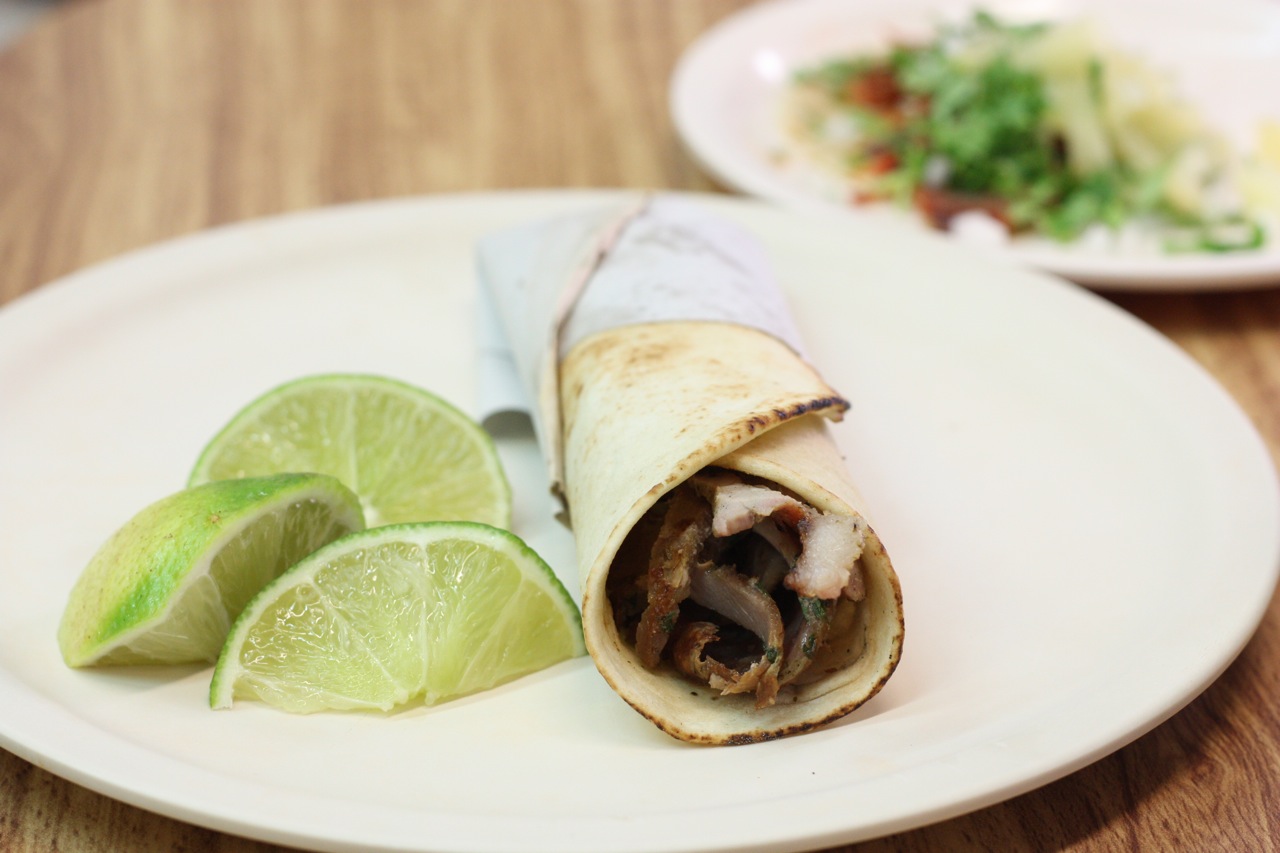
Slicing off grilled pork for tacos árabes in Puebla, Mexico

So I’ve been holding onto this news for a few weeks now, but I can finally tell you officially: Eat Mexico has launched culinary tours in Puebla!

We’re pairing up with All About Puebla, an English-language website that’s run by my friend Rebecca Smith Hurd. She’s an amazing Puebla resource and an all-around excellent person. Rebecca will be leading the tours.

As of now, we’re offering two routes — Chiles en Nogada and A Taste of Puebla. The former includes a visit to the Ex-Convento de Santa Mónica, where chiles en nogada were created, and a market visit to learn about the ingredients. It’s capped off with a chile en nogada cooking class with renowned Puebla chef Alonso Hernández.

The Taste of Puebla tour offers an introduction to Puebla’s more popular casual fare, including all the gorgeous goodies I blogged about a few weeks ago: pelonas, tacos árabes, cemitas and more.

You can find more details, including prices and reservation info, on our (sort of newly designed) Eat Mexico website.

If you or anyone you know is visiting Puebla, I’d love it if you kept us in mind. Note that the Chiles en Nogada Tour will be offered in August and September only, in keeping with the seasonality of the ingredients.

On a personal note, I am really excited about this collaboration and for stepping out beyond Mexico City with the food tours. My business turns two years old this month. Feeling like a proud mom.

Filed Under: Travel Tagged With: Eat Mexico, Puebla

Kicking off chiles en nogada season in Puebla

July 18, 2012 by Lesley Tellez

chile en nogada

A chile en nogada from Mesón Sacristía in Puebla

The 2012 chiles en nogada season officially started last weekend in Puebla. I was lucky enough to visit the city just beforehand and score a chiles en nogada cooking class with Alonso Hernández, chef at Mesón Sacristía, one of the best restaurants in the city.

I’ve explained the chile en nogada process before, but cooking this dish at home — or anywhere — is painstaking. First you have to char, peel and seed the chiles. Then you have to chop a long list of sweet and savory ingredients, including tomatoes, onion, apples, pears and peaches. You have to peel walnuts BY HAND, because no walnut-peeling device has been invented yet.

I actually think you gotta feel a little like the nuns, or at least remember them, when you’re putting this all together. (The nuns of Puebla’s Santa Mónica Convent invented the dish in 1821.)

This chile is the equivalent of a baroque altarpiece in a church.

The chopped peaches, apples and pears, ready to go into the pot.

Gorgeous chopped tomatoes

Everything in the pot together, before it's spooned into the chile

Chef Alonso took us through the chopping and the preparing of the fluffy egg batter, called the capeado. Then, when it was time to fry the chiles, he placed one in the eggy cloud and brushed each side lovingly.

When it was our turn to do the same, he told us: “Slowly. Con calma.”

After the egg-dip, into the frying pan it went. There we bathed the chile just as lovingly with oil. It puffed up and sizzled.

Bathing the egg-dipped chile en nogada with oil

My first chile en nogada of the 2012 season:

Pouring walnut sauce on the chile en nogada

The finished chile en nogada

Where do you plan to eat a chile en nogada this year?

More on chiles en nogada and Mexican convent cooking:
Four Chiles, One Day: A marathon chile-en nogada tasting in Mexico City
How to make a proper chile en nogada
Where to eat chiles en nogada in Puebla
Desserts of the Spanish convents in Mexico

Filed Under: Travel Tagged With: chiles en nogada, nuns, Puebla

Beyond mole — Poblano food in pictures

July 9, 2012 by Lesley Tellez

A pelona, or fried poblano sandwich stuffed with lettuce, crema and shredded meat

I was in Puebla this weekend visiting my friend Rebecca, who runs the excellent All About Puebla, an English-language online city guide. She’s a badass go-getter type of gal, so when the two of us get together it always feels like we can conquer the world.

She took me to some of her favorite places to eat, and interestingly, few involved corn. Puebla is full of savory breads: the pambazo (a plump, flour-dusted bread, not in any way similar to the Mexico City pambazo); the pelona (a fried roll); the chancla (a fried roll covered in sauce); the telera (a flat, soft roll used for tortas); the cemita (an airy, sesame-seed dusted roll), and the torta de agua (a crunchy, rustic bread). All are used in different sandwiches. The most Poblano of tacos, the taco árabe, is traditionally served on pita bread and not corn tortillas.

The two of us hit Puebla’s Centro last week for a food-fest, filling up on as many snacks as our stomachs could handle. (This may be why my stomach can suddenly only handle rice and applesauce. The travails of being a food researcher.)

Here’s a quick look at what we tried:

A taco árabe, or spit-roasted pork wrapped in pita bread. This tasted different than Mexico City's árabes -- much closer to shawarma.

We tried mole in sandwich form. (As an aside, I love how manageable Puebla's tortas are. Yay for not being as large as your head!) This torta de mole from El Girofle was excellent.

Chalupas, or little corn tortillas bathed in salsa and shredded meat. The red salsa uses chipotles, because poblanos love them.

I've technically eaten this same cemita once before, but it's so good (Cemitas Beto at La Acocota) that it has become my poblano requirement.

Did I really have room to squeeze in a fresh-baked concha after all of that food? Yes. Yes, I did.

I’ve got some exciting Puebla news to share in the next few weeks, so stay tuned…

Filed Under: Streets & Markets, Travel Tagged With: bread, concha, Puebla

So long, Puebla – A wrap-up of the International Mole Festival

May 14, 2012 by Lesley Tellez

Cemita Puebla

A cemita from Cemitas Beto inside the Mercado La Acocota.

After two days of Puebla’s International Mole Festival, I came home to Mexico City with stars in my eyes.

I’d learned about mole and regional Mexican food from some of the top culinary minds in Mexico. I’d met some of Puebla’s top chefs, and watched mayoras make foods from their pueblos. And there was the food outside the festival, in Puebla’s markets and restaurants: cemitas stacked tall with shredded quesillo. The crispy crackery creamy guajolote, and the chipotle-guajillo soaked chancla. The little bowls of tart chipotle rajas everywhere. How had I not explored any of this before, living only two hours away?

I’m already thinking about my next trip to Puebla to eat more and hang out with new friends. And of course, I’m looking forward to next year’s festival. Seems like this one was a success.

Here are a few last highlights of my trip:

At the cemita stand: Con rajas o con chipotle guerita?

Papalo Cemitas

I fell in love with papaloquelite all over again.

Mole poblano

Mole poblano at La Casita Poblana

A guajolote -- a typical Poblano antojito made of crispy-fried torta de agua bread, crema, salsa and shredded turkey

Making pipián verde from scratch at a private home in Cholula

Grinding toasted pumpkin and sesame seeds at the neighborhood molino

Cooking the pipián verde

Piping chocolate-mole truffles with Chef Ángel Vázquez of Cholula's Intro restaurant.

Dusting the truffles with ground-up, toasted corn tortillas

Placing each truffle in its own individual mole-themed box.

Filed Under: Travel Tagged With: chocolate, mole, Puebla

Next Page »

Primary Sidebar

Who is Mija?


Mija is Lesley Téllez, a writer, mom, and culinary entrepreneur in New York City. I lived in Mexico City for four years, which cemented my deep love for Mexican food and culture. I'm currently the owner/operator of the top-rated tourism company Eat Mexico. I also wrote the cookbook Eat Mexico: Recipes from Mexico City's Streets, Markets & Fondas.

Search this site

Buy My Book On Amazon

Eat Mexico by Lesley Tellez

Get The Mija Chronicles in your inbox

Enter your email address:

Delivered by FeedBurner

Read my old posts

Copyright © 2026 · Foodie Pro & The Genesis Framework