• Skip to main content
  • Skip to primary sidebar

The Mija Chronicles

Mexican food and culture, on both sides of the border

Learning To Cook

How to peel walnuts for chiles en nogada, 19th-century nun style

September 4, 2012 by Lesley Tellez

My freshly peeled walnuts, mixed with my own blood, sweat and tears

Once I decided I was going to make homemade chiles en nogada this year, I became obsessed with peeling my own walnuts.

Skinless, pristine walnuts are a requirement for the nogada, the creamy sauce that covers the Poblano pepper. The sauce must be white to reflect one of the colors of the Mexican flag; walnut skin adds a brownish tint.

In both of the chiles en nogada cooking classes I’d taken, we did not peel our own walnuts because it took too long. In fact, no one I knew peeled their walnuts themselves. I kept wondering: how long did peeling walnuts actually take? If I really wanted to understand chiles en nogada, a recipe invented by ascetic Poblana nuns who scorned idleness, didn’t I sort of have to know?

It turns out nature didn’t really intend for walnuts to be peeled. First you have to remove the shell without destroying the soft walnut pulp inside. Then you have to wiggle the walnuts out of their crevices, and delicately, with the agility of threading a needle, peel back their papery skin tiny pieces at a time. When — huzzah! — one large piece of skin comes off, it’s like putting the last piece in the jigsaw puzzle, or peeling an orange in one long, windy strip. There is satisfaction in peeling walnuts. But it comes in trickles.

In my quest to feel like a 19th-century Mexican nun, I spent 4 1/2 hours last Friday and Saturday cracking and peeling walnuts. That was the key part I hadn’t thought of: the cracking. By the time I had enough walnuts to make nogada sauce for 10 people (roughly 4 cups of whole and halved walnuts), my thumbs were sore and covered in scrapes. My eyes hurt from squinting at pinhead-sized pieces of walnut skin. I couldn’t even take pictures with my iPhone of my pile of walnut scraps and shells, because my thumbs didn’t want to move. It was like Blackberry thumb, but worse. Walnut thumb.

I will never do it again, unless I’m only cooking for four. But who makes chiles en nogada for four?

Here are some instructions, in case you’re struck with a bout of nunliness like I was.

How to Peel Walnuts
By a Girl Who Peeled Walnuts for More Than 4 Hours, To Make a Mexican Dish In the Style of the Nuns

1. Using a small hammer (forget the nutcracker, in my opinion, as it gives an out-of-control crack instead of controlled hits here and there), crack the walnut once along the thick border that runs from pole-to-pole. Turn it over and crack in the same place on the other side.

2. Still using your hammer, crack the walnut a few times along its smooth, rounded shell. Turn it over and do the same thing again. You don’t want to crack only on one side, as that will loosen the walnuts one one side and not the other, and it’s a big bummer when that happens because one side of your walnut WILL NOT COME OUT. (Alternately, once you’re comfortable cracking, you may hit the walnut multiple times in different spots, turning as you see fit.)

3. Once you notice cracks in the outer shell, peel it away with your fingers. You should see glorious walnuts inside.

4. Carefully remove the remaining outer shell and wiggle the walnuts inside, freeing them of the tough inner somewhat T-shaped membrane. If small walnut pieces break off, that’s okay. Let them go. You don’t really need them anyway.

5. You should now have large pieces of walnut, free of their shell and their tough membrane. Using your fingernail (and your reading glasses, if you need them), gently tear a piece of the skin off. Continue until all the skin is removed. It’s sort of like peeling a garlic clove. Take pleasure in it.

6. The naked walnuts should be placed in water so they don’t turn brown. Freeze them if you’re planning on using them in more than 24 hours. Note that they WILL turn slightly beige in the freezer unless you freeze them in water. I personally find the freezing-in-water step unnecessary, as my walnut sauce still turned out very white, from both the milk and the goat cheese.

I’ll be posting my recipe in a few days, as soon as my fingers recover.

Previously on The Mija Chronicles:
Kicking off Chiles en Nogada Season in Puebla
Four Chiles, One Day: A Marathon Chiles En Nogada Tasting in Mexico City
How to Make A Proper Chile en Nogada

Filed Under: Learning To Cook, Traditional Mexican Food Tagged With: chiles en nogada, nuns, Puebla

Calling all experts: How do you cook maguey flowers?

April 27, 2012 by Lesley Tellez

maguey flowers

In the past six months or so, I’ve become a little obsessed with flowering maguey.

The maguey, also known as agave, blooms when it’s mature, a process that can take anywhere from 6 to 28 years depending on the plant. Weirdly, the flowers don’t sprout from the leaves themselves — they grow on a trunk-like stalk called a quiote, which grows from the center of the plant like a tree.

Blooming maguey

Blooming maguey from UNAM's Jardín Botánico

I love the idea that a regular old agave can transform into a strange, beautiful plant-within-a-plant when it’s about to die. (It kinda starts to make me believe in the mysticism of the Aztecs. Or maybe I’ve been here too long.) I’ve started spotting flowering magueyes everywhere and taking secret pictures of them on my camera. One day I’m going to post them all for you.

Right now I wanted to ask: how much do you know about maguey flowers as a food source? I know they’re eaten here as a vegetable, when folks can find them.

A few weeks ago I spotted a package at Mercado San Juan and decided to make them as an experiment. The vendor gave me detailed cooking instructions: peel back the outer petals, remove the center stigma, and then boil or sautee in oil, garlic and onion.

I did what she said, except I decided to steam them instead of boil. Cooked ’em in a little onion and garlic and sprinkled on some sea salt.

I was expecting a revelation, like the first time I tasted izote flowers. Instead they were bitter and sort of rubbery. My friend Liz, lover of bitter vegetables, raved about them. The rest of us kinda frowned. I felt bad later that night when I dumped them into the trash. Sorry agave that took maybe six years or longer to give us your flowers. I’m totally not worthy of you.

So how do I cook these? Have you made them before? I tasted them as they cooked on the stove, and they weren’t bitter after about 3 to 5 minutes in the frying pan. But the texture was even more rubbery that way.

What did I do wrong? Maybe I didn’t peel them correctly? Or were they old? (Or not old enough?)

Filed Under: Learning To Cook Tagged With: maguey

Five truths about tamales

February 2, 2012 by Lesley Tellez

A masa-free tamal, made with mojarra, tomatillos, xoconostle and epazote

The more I learn about Mexican food, the more I realize I’ll never know enough.

So many things just simply aren’t written down: recipes, techniques, the names of regional chiles from tiny villages. Really learning this cuisine means traveling to cities and towns and tasting as many things as possible. Or at least studying with people who have.

This is why I was so excited to take a four-day prehispanic tamales cooking course at the Fundación Herdez last week. The course would be taught by Raúl Traslosheros, a chef who has researched tamales in cities and villages across Mexico, and writes about Mexican culinary culture for the magazine Sabor a México. The course also included a guided visit to UNAM’s Jardín Botánico, led by two UNAM scientists (I’d probably call them ethnobiologists): Drs. Robert Bye and Edelmira Linares.

After four days — and the fantastic visit to the Jardín Botánico, where I’d never been — I ended up learning more than I could have hoped. I was literally on a tamal-high, wanting to shout at everyone, “My eyes have been opened!”

Here’s a list of five things I learned in the class. If you’re planning to make tamales for Día de Candelaria, which is today, this might be helpful for you. (For more on what tamales have to do with Día de la Candelaria, here’s my post on strawberry tamales from last year.)

Five Truths About Tamales

Tamales at the Fundación Herdez

Beating the masa in a KitchenAid mixer.

1. The perfect tamal starts with the masa. Of course the fillings matter too, but the most margin for error lies in the dough. If your masa isn’t adequately hydrated, the tamales will come out sandy and dry; if you haven’t beaten the dough enough, they’ll be too dense. The most important thing to remember is that tamal masa must be very moist and light. When you’ve prepared your masa, do the “float” test: spoon a little bit of dough into a bowl of water. If it floats, it’s done. If it sinks, it needs more liquid, a little more fat and several more minutes of mixing, ideally with a high-powered mixer.

The KitchenAid is a tamalero’s best friend.

Adding tortilla masa to a standing mixer, during a tamales course at the Fundación Herdez

2. Using fresh, nixtamalized corn flour makes a difference. I know not all of us have access to harina fresca, made from coarsely ground, winnowed nixtamalized corn. (If you live in Mexico, this sold at most molinos de nixtamal.) But fresh flour really does make a difference. Not only is the masa more flavorful — it tastes like corn! — it’s also moist, and you don’t have to drown your flour in chicken stock or more lard to make up for the difference. Which brings me to number two…

Fresh lard

Doesn't the lard look so creamy and good?

3. Lard, if you’re using it, must be whipped into submission. One day I’m going to experiment with coconut oil, but right now my tamal fat-of-choice is lard — preferably very white, fresh lard. Vegetable shortening can work, too, although Chef Raúl says the tamales made with manteca vegetal overcook and dry out easily. (So watch the pot like a hawk if you’re a vegetarian.) The lard needs to be light and airy, which is what results in that gorgeous, porous, spongey tamal. In class, we whipped our lard with the paddle attachment on a KitchenAid mixer for a good 10 minutes.

But if you don’t want to use lard….

4. You don’t need to use any fat at all — lard-less tamales are actually delicious. Lard-free tamales are the most historically accurate to Mexico, considering the Spaniards brought pigs after they arrived in the 16th century. I’d always assumed they’d be dense bricks, and they are if you put too much masa in the husk. But if you put just the right amount — a thin disc, folded gently around the filling — it’s gorgeous. I like the masa-free tamales to be mixed all the way through with beans or herbs. You don’t even miss the lard.

5. No corn husks? No problem.

Chaya leaf tamales

Chef Raul demonstrates how to fold a chaya-leaf tamal

The word tamal comes from the Nahuatl word tamalli, which means “wrapped.” You could really wrap your tamales in anything: banana leaves, corn leaves (“hoja de milpa” in Spanish), the leaves of large reeds (“hoja de carrizo”), chaya. Alternately, you don’t even need masa, if you’ve got cornhusks on hand. Some prehispanic tamales, such as the one of the mojarra at the beginning of this post, required just placing the fish and ingredients in a corn husk, wrapping it tightly and grilling it.

Wait, did you just say grilling a tamal?… Yes. I did.

6. Tamales can be microwaved or grilled. (I know this is a list of five truths, but these were too good to leave off the list.)

Charred, grilled tamales

These tamales were cooked on a grill, over a medium-low flame for about an hour.

It was not uncommon in prehispanic Mexico to use the husk as a sort of parchment wrap, to slow-cook and steam whatever was inside. You just choose your filling (in our case, we made a fish-tomatillo-xoconostle tamal, and one with chicken gizzards and tomatillos), wrap it tightly, and heat it on the comal until cooked all the way through.

As far as microwaving goes, I wouldn’t recommend it for very large batches, but it’s helpful if you’d like to zap one and see how it tastes. The masa often needs more salt than you think it does, because the saltiness level dulls quite a bit as the tamales steam. UPDATE: You can also microwave raw, frozen tamales that haven’t been steamed yet. Again, I’d only recommend in small batches, as the edges tend to get overcooked and tough. (The rest of the tamal is fine.) Wrap them in paper towels and start at two minutes on high, depending on how large they are. This is super convenient if you make a big batch of tamales are are too tired to steam them all! The rest can be placed raw in a resealable freezer bag and microwaved one or two at a time.

I know I’m only hitting the tip of the tamal iceberg here, so if you have any more tips or ideas, I’m open to them below.

Feliz Día de la Candelaria!

More On Tamales & Prehispanic Mexican Foods:
Fundación Herdez: A Comprehensive Report on the Mexican Chile (PDF in English)
Tecnología Alimentaria Prehispánica by Janet Long (PDF en español) — An interesting report on how Mesoamerican cultures cooked, the utensils they used, and their cooking techniques
Candelaria means Tamales by Rachel Laudan (Zester Daily)

Tamales de frijol, the last variety we made at the Fundación Herdez

Filed Under: Learning To Cook Tagged With: tamales

Understanding Mexico’s seasonal produce

January 10, 2012 by Lesley Tellez

A few weeks ago I stumbled across a neat little pamphlet put out by SAGARPA, Mexico’s agriculture ministry. Transparency around food isn’t exactly common here, so I was surprised to see a neat, organized chart listing the seasonal availability of some of Mexico’s most popular ingredients.

I checked out the accompanying website when I got home, and it’s worth visiting if you’re curious about Mexican ingredients and their benefits. The page, México Produce, offers seasonal calendars for common Mexican fruit, vegetables and seafood, and it gives nutritional facts about each item. It’s in Spanish, but if you don’t speak Spanish maybe Google Translate could help.

Here’s one of the charts I found so useful:

Happy market shopping!

Filed Under: Learning To Cook

How to clean huauzontles, and prepare them for cooking

September 21, 2010 by Lesley Tellez

I’m glad y’all are excited about my Week of Huauzontles. Well, except for Don Cuevas, who compared them to “bottle brushes.” But that’s okay. I still heart you, Don.

My first post is about how to clean the vegetable. As I mentioned yesterday, it’s an involved process. You might want to have a radio or iPod jamming out some of your favorite hits as you pluck and de-stem, just to help the time pass more quickly.

Also: make sure your huauz is a deep green color. If you see any yellow buds, don’t add them to your pile, because they’ll impart a bitter flavor in the end.

More fun huauzontle cleaning tips below.

How to Clean and Prepare Huauzontles

The huauzontles are quite large creatures, aren't they?


…

Read More

Filed Under: Learning To Cook Tagged With: huauzontle

How to season a molcajete, when you’re absolutely tired of grinding

August 25, 2010 by Lesley Tellez

During my last cooking class, Yuri announced that we were taking a break from the metate. Instead, we’d cook up a few antojitos — corn-based snacks — which we’d then get to eat. This was cause for rejoicing, because we hadn’t eaten anything in the past two classes, despite marathon-amounts of grinding.

On the menu was homemade refried black beans, various types of salsa made in our molcajetes, and tortillas, tlacoyos and sopes from ready-made masa.

First, he instructed us how to cook the beans. We should pick over them carefully to remove any small stones, and then soak them overnight until the water turned an inky black color. We could use the same soaking water to cook the beans, ideally in a clay bean pot. Yuri warned us not to salt the beans or add anything to them while they’re cooking, save for a wee bit of epazote at the end.

He rhapsodized a bit more about black beans and how delicious they are, and then sent us off to our molcajetes to make salsas. As folks began pulling their molcajetes off the shelves, he called out a question:

“Everyone has seasoned their molcajetes, right?”

I’d been dreading this moment.
…

Read More

Filed Under: Learning To Cook Tagged With: molcajete

Lessons in back-breaking Mesoamerican cooking: How to season a metate

July 16, 2010 by Lesley Tellez

Yesterday I trucked down to Mercado Merced and bought my metate, the lava-rock tablet and grinding stone I need for my cooking class.

I was a little worried that I’d pick the wrong one. Would it have enough of a slope? What if I got the wrong-size grinding stone?

When I got there, most of the metates looked the same, and there wasn’t much of a selection to begin with. (“There’s not much of a commercial demand,” one vendor explained.) I ended up choosing one with only a slight slope and a surface that didn’t look too porous. It cost 370 pesos, or about $30 USD.

The vendor wrapped it in string y ya, I was done; I carried my new metate on the Metro all the way home. My friend Julie, bless her heart, came with me to help bear some of the weight.

Yesterday at cooking class, everyone sat down to use their metates to grind nixtamal, the corn treated with slaked lime that would eventually become tortillas. Yuri had one question before we could all proceed: “Is there anyone here who hasn’t seasoned their metate?”

I waved my hand in the air. Naively, I had no idea what was involved.
…

Read More

Filed Under: Learning To Cook, Traditional Mexican Food Tagged With: metate, Mexican cooking school

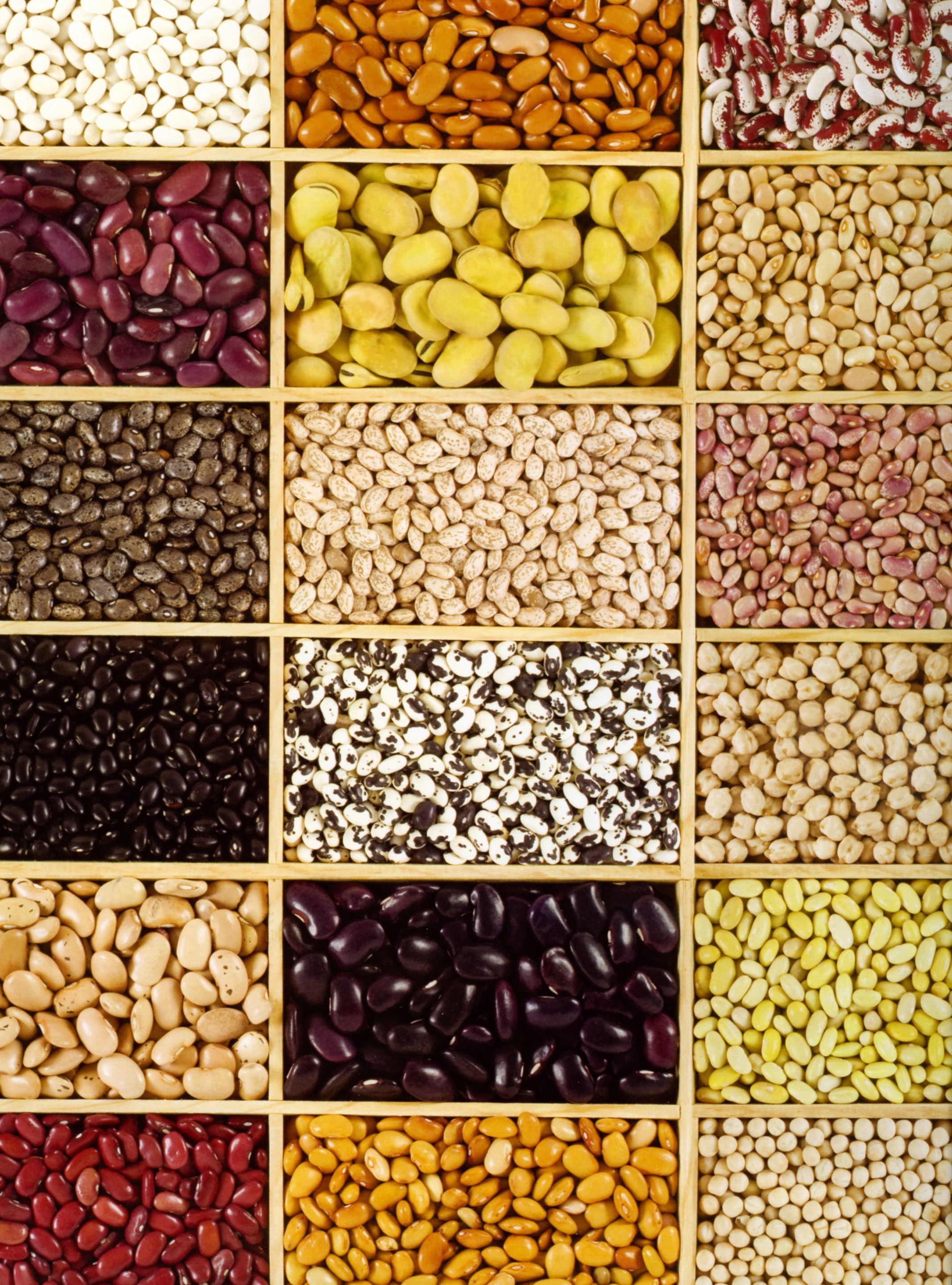
A quick guide to Mexican beans

June 14, 2010 by Lesley Tellez

Amid all the recent talk of beans, guess what I found yesterday? An entire page devoted to Mexican bean varietals, on the June page of my 2010 Mexican gastronomy calendar. (Yes, I’m a food nerd.) I had the calendar turned to March for some reason, so I’d been staring at a dozen varieties of ollas. When I finally updated it — boom. Beans. There they were.

The page was too big to scan the descriptions, so here’s the key, starting from the upper left corner and moving from left to right. Now maybe you’ll realize why I’ve been so confused about their names. There are so many bean varieties here, it’s hard to keep up.

…

Read More

Filed Under: Learning To Cook Tagged With: beans

Dear clay bean pot: I love you

December 22, 2009 by Lesley Tellez

Remember the bean pot I bought last week? Here it is.

My mom wanted me to make sure and tell you that it’s lead-free. Too much lead in one’s system can lead to neurological problems.

So. I used it on Saturday for the first time. Well, actually, on Friday, per the seller’s instructions, I filled it with water and simmered it on a low flame for four hours, to prep the pot for cooking. (I think this removes a layer of grit on the surface.)

On Saturday, Lola came over to help me get ready for the tamalada. We finished a few fillings, and she prepared the beans while I was at the gym. Into the pot the beans went, with a handful of epazote, onion and a little bit of canola oil.

About three hours later, we fished some out of the pot with a wooden spoon. The bean caldo had turned a rich, hot-cocoa brown color, with a sheen of greenish-brown on the surface. I was worried about the green color at first, but Lola reminded me that it was from the epazote.

I couldn’t get over how good they smelled. Of course I’d been around pots of beans cooking before, but they were never as fragrant as this. These were earthy and sweet, and clean. The bean starch, when you rubbed it between your fingers, felt creamy and soft. And the caldo — oh god, the caldo. It had this thickness to it, this heft, as if we had added flour or something. I wanted to bottle it, and save it, and slurp just a teensy bit every day for the rest of my life.

I’d bought these beans and the bean pot, by the way, through Xoxoc, a small family-owned business based in Hidalgo state.

“Mmmmmmmm,” I said loudly, after dipping my nose in the pot and inhaling deeply.

“Está enamorada de frijoles,” Lola announced. She’s in love with beans.

More correctly: I’m in love with fresh beans, my new clay pot, and the mixture of the two together.

All my cazuela needs now is a name. Any ideas?

Filed Under: Learning To Cook Tagged With: beans

Live blogging: Stumbling my way through one dozen tamales

December 15, 2009 by Lesley Tellez

This weekend I’m hosting a bunch of women for a tamalada, or tamale-making party. Seeing as I haven’t made tamales in like three years, and the last time was with a cooking course — when they chopped everything for me and cleaned up — I figured I should try a practice batch today, just to see how they turn out. And hell, since I’m doing this all by myself, why not live blog it?

I’ve got all my ingredients. Windows are open, as to diffuse any strange cooking smells. Hair is back. Apron, about to be tied on. Music, I need to choose. Other than that I’m ready to go.

Ooooh! Can you feel the excitement? What’ll happen? Will my lard be rancid, as a teensy weensy part of me thinks? (Because I purchased it from a plastic bucket, from a random dude at Mercado Merced.) Will I succumb to the little voice in my head telling me to toss in a handful of romeritos and mole as tamale filling, even though that’s not a typical Mexican Christmas tamale?

Will I eat all of my queso manchego before it makes it into the masa?

And how the heck long is this going to take, anyway?

Find out. Live tamale blogging starts now.
…

Read More

Filed Under: Learning To Cook Tagged With: holidays, tamales

Primary Sidebar

Who is Mija?


Mija is Lesley Téllez, a writer, mom, and culinary entrepreneur in New York City. I lived in Mexico City for four years, which cemented my deep love for Mexican food and culture. I'm currently the owner/operator of the top-rated tourism company Eat Mexico. I also wrote the cookbook Eat Mexico: Recipes from Mexico City's Streets, Markets & Fondas.

Search this site

Buy My Book On Amazon

Eat Mexico by Lesley Tellez

Get The Mija Chronicles in your inbox

Enter your email address:

Delivered by FeedBurner

Read my old posts

Copyright © 2026 · Foodie Pro & The Genesis Framework