• Skip to main content
  • Skip to primary sidebar

The Mija Chronicles

Mexican food and culture, on both sides of the border

cheese

Green bean and chayote salad with queso cotija

July 25, 2011 by Lesley Tellez

I took a trip to Xalapa, Veracruz recently, and I ate way too much. Gorgeous, grasa-laden picaditas topped with cheese and plantain? Yes please. Mole? Mmm-hmmm. How about a side of it to accompany my cream-drenched enchiladas?

When I got home and stepped on the scale (Lesley, don’t ever step on the scale again), I wanted to cry. Then I vowed to eat more vegetables.

The lettuce at my local market looked a little sad, so I went with green beans, which are available year-round in Mexico because they’re native vegetables. The word “ejote” was “ejotl” in Nahuatl. I had a vision of cold, crisp green beans, mixed with some tomato and a little chayote.

I think the universe really wanted me to eat more vegetables again, because this was the best salad I’d eaten in a long time. The chayote added just the right touch of the sweetness; the crisp green beans gave texture. Crumbled cotija cheese, salty and slightly sour, tied everything together.

I made a simple vinaigrette to accompany this dish, but I didn’t even need it. The cheese was practically the dressing.

Crayton and I didn’t finish this in one sitting. I ate the leftovers out of the bowl for the next few days. Does anyone else besides me love doing that?

Green bean, chayote and cotija cheese salad
Serves 4 generously

Note: I used guaje tomatoes here, a Mexican variety that’s slightly larger than a Roma. Feel free to use the ripest, freshest tomatoes you can find. Queso cotija should be available at most Mexican supermarkets. If you can’t find it, you can substitute another salty, mild cheese. Just make sure it doesn’t taste too aged, because that might overwhelm the other flavors in the dish.

Ingredients

2 chayotes, diced into 1/2″ pieces
8 oz/250g green beans, chopped into about 2” pieces (this equals about 2 heaping cups)
2 ripe tomatoes* (see note), chopped
Good handful cilantro, stems included, chopped
Cotija cheese to taste — I used about 1/4 cup crumbled

Vinaigrette (optional):
3 T. apple cider vinegar
1/2 teaspoon dijon mustard
dollop of agave honey, or sweetener of your choice
4 T. olive oil

Directions

Heat a saucepan of water to boil on the stove. Nearby, fill a large boil with water and ice cubes. (We’re going to blanch the green beans.) When the water in the saucepan is boiling, add your green beans and a hefty dose of salt.

While the green beans cook, place the diced chayote into a microwave-proof bowl and mix generously with salt. Cover with plastic wrap that’s been perforated a few times with a fork, or with a sheet of wax paper. Cook until crisp-tender, about 2 to 3 minutes on high.

Once green beans have boiled for perhaps three to five minutes — they should be just slightly more tender than they were when you placed them in the pot; above all they should still be green — remove them with a slotted spoon, and place them in the bowl of ice water. Let sit for at least five minutes to stop them from cooking further. This will make them nice and crisp later.

Place chayote, hopefully cooled by now, and chilled, drained green beans into a serving bowl. Add the diced tomatoes, cilantro and cheese. Mix until well combined. (Taste here and see if you need more salt.) If making the vinaigrette, combine all ingredients and add the oil last. Whisk quickly until the oil and vinegar look fully integrated.

Serve as a light lunch on its own, or to accompany something else. I used this as a side dish for pasta.

Filed Under: Recipes Tagged With: cheese, Salads, Vegetarian

Swiss chard pesto, with pumpkin seeds and queso añejo

April 27, 2011 by Lesley Tellez

One of the funny things about living in Mexico City is that it’s tough to find basil here. The big bunches of fresh Genovese basil don’t really exist — I’ve seen them once in two years, at the Mercado El 100.

We also don’t get a large variety of year-round greens. We’ve got spinach and chard, and quintoniles and quelites in the rainy season. But I feel a pang in my heart whenever I hear Americans talking about kale, broccoli rabe and collards. Oh well. We’ve got mamey and drippy, juicy manila mangoes, and they don’t.

The point is: I’m always looking for new ways to prepare my old chard-and-spinach standbys. A few weeks ago, I saw a recipe for swiss chard pesto in Sunset magazine. How perfect! Why hadn’t I ever thought of that before?

(You may be asking what the heck I’m doing thumbing through Sunset magazine when I live in Mexico City. My mom, who lives in Washington, occasionally buys it for me. She subscribed when I was a kid, and the magazine still reminds me of all the things I love about California — the sunshine, the fresh produce, the constant promise of eating dinners outside. Mexico feels like that at times.)

I ended up making Sunset’s pesto recipe a half-dozen times, Mexicanizing the ingredients where possible. I swapped out the walnuts for pine nuts and then pumpkin seeds, and the parmesan for queso añejo. I also added more garlic, because there’s never enough for me. Although I will definitively tell you that five cloves is too much. Aack.

All of the pestos were pretty great: the pine-nut version was creamier and nuttier than other pestos I’ve tried, while the pumpkin seed-añejo was slightly more crumbly, salty and sharp. (I didn’t make it with walnuts, because those are in season only once a year here.) Drizzling the pesto over steamed chayote was just about perfect, even though the entire thing was green. I also bought some beet pasta from a little shop near Mercado San Juan, which made for a colorful purple-and-green dinner. Crayton said it looked like Mardi Gras.

Here’s the recipe, in case you’re looking for something quick to make for dinner. I may even try it with epazote, which is growing like a weed outside my window.

Swiss Chard Pesto
Adapted slightly from Sunset Magazine
Serves 4 with sauce left over

Note: Don’t feel hemmed in by the amount of chard you use. The original recipe called for two cups, but I didn’t want to be bothered with measuring the leaves, so I just started using the entire bunch. You could also save the stems for a soup or to chop and stew into a taco filling later, with some tomatoes and spinach.

Ingredients

1 bunch swiss chard (around 7 ounces), leaves removed, stems discarded or saved for another use
2 cloves garlic, peeled
1/4 cup grated queso añejo, or grated parmesan
1/2 cup pine nuts or pumpkin seeds
1/4 cup olive oil — possibly a little more if you’re using the pumpkin seeds
Salt
Pepper

Directions

In a food processor, add the garlic and pulse to chop. Then add the chard, cheese and nuts or seeds. Pulse until smooth — feel free to scrape down the sides of the bowl to add in any errant cheese or chard bits. Add olive oil and blend until smooth. Season with salt and pepper to taste. Serve with pasta, vegetables, or (as I did with my sister-in-law recently) spread on crusty bread.

Filed Under: Recipes Tagged With: cheese, pumpkin seeds, Vegetarian

Mex-Tex queso with huauzontle and chorizo verde

September 22, 2010 by Lesley Tellez

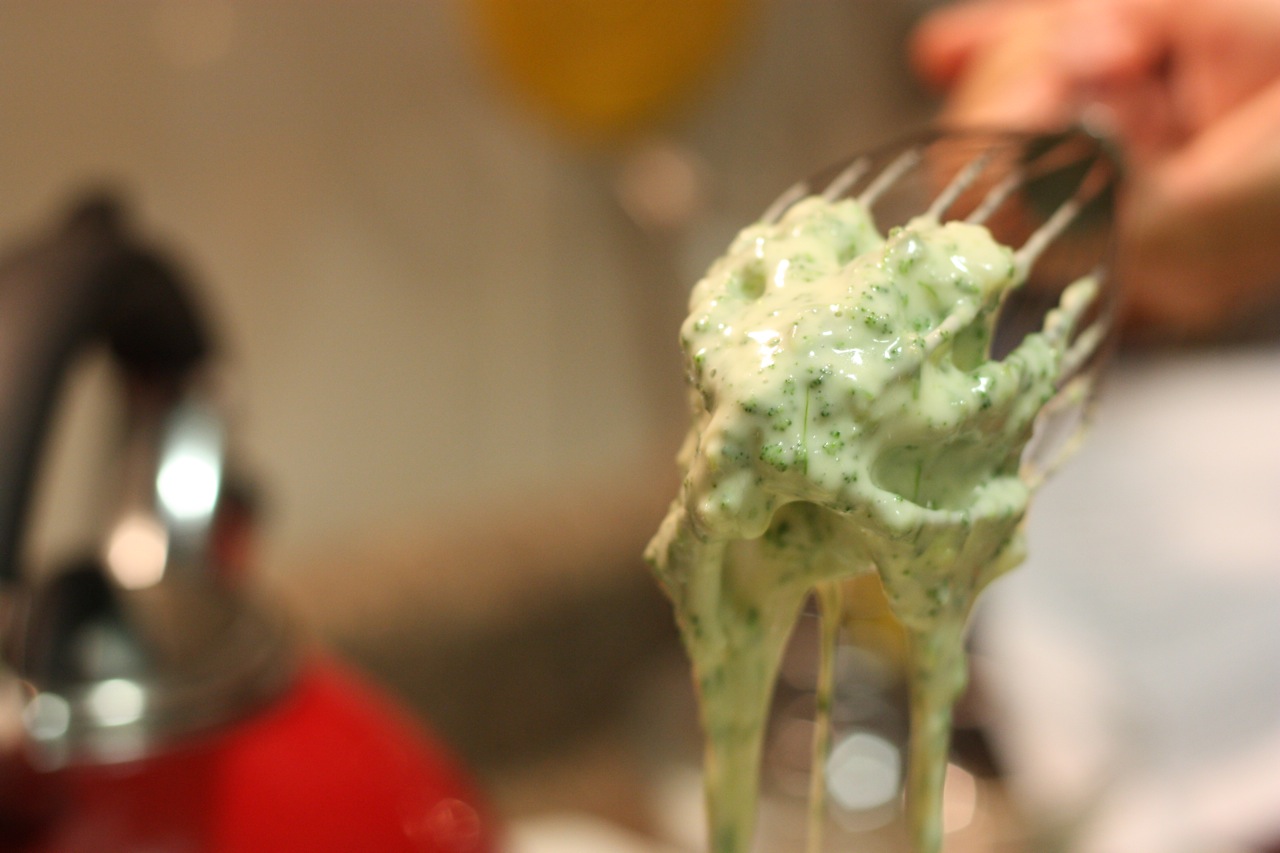
It may look like guac in the photo, but I promise you it's queso. And yes, that is a Texas-shaped bowl in the background.

I’m not as knowledgeable as some people in the Tex-Mex cuisine cannon, but eight years in Texas did teach me the importance of one thing: queso. (That’s pronounced KAY-so.)

Queso is basically a jazzed-up melted cheese sauce, consisting of Velveeta, tomatoes, onions, jalapeños and maybe crumbly bits of ground beef. You eat it with tortilla chips. And beer. Preferably on game day. Or during happy hour. Ok, you pretty much eat it whenever the mood strikes.

I’d been hankering for some queso since we moved to Mexico, but I couldn’t find it anywhere. Chili’s had it (score!) but then they took it off their menu (lame). Crayton and I suffered through our queso-less lives in silence until a few weekends ago when he said, “You know what sounds really good right now? Queso.” And I said, “Yeah, I agree. Why don’t I make some?”

Until that point, I hadn’t thought about making queso from scratch because it requires Velveeta. Velveeta is sold at Costco, and I couldn’t justify a $10 cab ride solely to buy processed cheese product.

But what if I used real cheese?

At that point, I think I might’ve heard the universe crackle.

I thought avoiding Velveeta was queso blasphemy, but it turns out there are a few real-cheese queso recipes on the Internet. I used a a Homesick Texan recipe as my inspiration, and piled together an assortment of items that I had in my fridge — Mexican manchego because it melted well, huauzontles because they’re vegetables and I like those; tomatoes, a jalapeño, carrots in escabeche.

My Mex-Tex queso was so good that I made it again the following weekend, this time for the Bears vs. Cowboys game. I added chorizo verde (pretty much because it rocks, and it kept the green theme) and I put the queso in our fondue pot to keep it saucy and hot. Alice and Nick, both of whom are Texans, came over. They practically swooned when the saw the pot of cheese.

We scooped it with homemade totopos, carrots, cucumbers. There wasn’t much talking going on.

You don’t need the huauzontles to make this dish a success — a pile of grated cheese will do that on its own.

However, the huauz did add a pleasant grit and chewiness, similar to a spinach-artichoke dip, or a broccoli-cheese soup. And I mean that in the most natural, comforting way possible, not in a chain-restaurant kind of way. I promise you, this stuff is good.

Recipe below.
…

Read More

Filed Under: Recipes Tagged With: cheese, huauzontle, Tex-Mex, Vegetarian

Tacos de rajas with queso cotija

September 10, 2010 by Lesley Tellez

Last week we had a guest instructor in cooking class, and he gave us a list of dishes to prepare over three hours: chiles rellenos, salsa de chile pasilla, fish wrapped in hoja santa and banana leaves, jalapeños en escabeche and rajas con queso cotija.

Out of all of them, the rajas were probably the least exciting. I love rajas (pronounced RAH-has) but what more can you learn about roasting, deveining and peeling poblano peppers, and then cutting them into strips? I’d already done it several times at home.

Instead, I chose to spend the class — where else — in front of the molcajete, grinding the chile pasilla salsa. I roasted my chiles and rehydrated them in boiling water, and then ground them to bits. (The key there: the chiles must be completely pliable. You can’t remove them from the water too soon.) I plopped one tomatillo after the other into the bowl and smooshed each one to death, while also trying to shield my apron from the splatter. (If you’re wondering why I used a partner’s molcajete instead of my own, it’s because I was too worried about a possible pumice aftertaste. I still haven’t seasoned the damn thing correctly.)

At the end of class, everyone got to take home a chile, one fish filet and the rajas in little plastic baggies. Back at our apartment, Crayton and I sat in front of the TV with a couple of beers and dug in.

I love to share with my husband, but the rajas were so good I wanted them all to myself. They had the sweetness of a roasted root vegetable, while the cheese gave the dish these bursts of saltiness, and a kind of sour, pastoral tang. Cotija is hard, crumbly cow’s-milk cheese that’s named after a town in Michoacán, where it’s manufactured; it is characteristically salty and slightly acidic.

The dish seemed hearty enough to work on its own as a taco filling. So I invited my friend Daniel over for dinner a few days ago and decided to make the rajas again. Right before he came over, I momentarily panicked: Was this going to work? Were the rajas too strong to serve on their own, with a few crumbly bits of cheese?

I made brown rice at the last minute, just in case we needed something bland. But everything turned out fine. The peppers were as sweet as I remembered, and I think the cheese actually helped mellow the dish out. I served the tacos with some of my leftover chile pasilla salsa and they were a hit.

Recipe below.
…

Read More

Filed Under: Recipes Tagged With: cheese, rajas, Vegetarian

Juanita’s Chiles Rellenos

June 11, 2010 by Lesley Tellez

Here’s the recipe from yesterday’s post. You’ll notice we used a small amount of beans in the recipe — it’s because we only filled three of the chiles with beans and cheese; the rest were cheese only. Enjoy!

…

Read More

Filed Under: Recipes Tagged With: cheese, chiles

Millet risotto with leeks, chilacayote and melted gruyere

June 3, 2010 by Lesley Tellez

When we moved a few weekends ago, I found a bag of millet that I’d forgotten about, wedged into a corner of my three-drawer pantry-on-wheels.

Millet is a nutty, whole-grain that’s produced mainly in Asia. I bought some last year at the Korean grocery store, not knowing exactly what I’d do with it. Fast forward 10 months later (cannot believe my Korean grocery store trip was already almost a year ago), and I’d done exactly nothing with it. Except stumble upon it and toss it into a moving box.

At our new apartment, living amid all the cardboard and dust was making me crave something homemade and comforting. A risotto. Mind you, I’ve never made risotto before. But how hard could it be? (Heh heh.) I consulted the Internet, and it confirmed — there were several recipes for millet risotto out there. Although the American blogosphere millet looked different than mine. Theirs was yellow; mine was white with brown speckles. (Perhaps mine was one of the “minor millets” mentioned in this Wikipedia article.)

Years ago, I made big pot of buttery polenta with leeks, and it was so fantastic that I knew I had to have leeks in my millet risotto. Found a leek at my local mercado, and also decided to throw in a few veggies that were ripening in the fridge: chilacayote and a serrano pepper. Chilacayote is a round, mildly sweet squash that’s native to Latin America. They look kind of like mini watermelons, with a thin skin instead of a rind.

I didn’t have any Parmesan (the go-to cheese topper for a risotto), but I did have gruyere. And although I didn’t have white wine, I did have Chinese cooking wine.

Exhilirated and flying by the seat of my pants, I whipped up my risotto over the course of an hour. It turned out great: nutty and full of texture (just slightly harder than your usual rice), with this intoxicating, light boozy smell, and of course, covered in cheese. I sat and watched our newly installed cable and was perfectly happy with life, even if my life at the moment happened to be cardboard-filled and dust-covered.

Recipe below.
…

Read More

Filed Under: Recipes Tagged With: cheese, Vegetarian

Deliciously smutty huitlacoche quesadillas

April 29, 2010 by Lesley Tellez

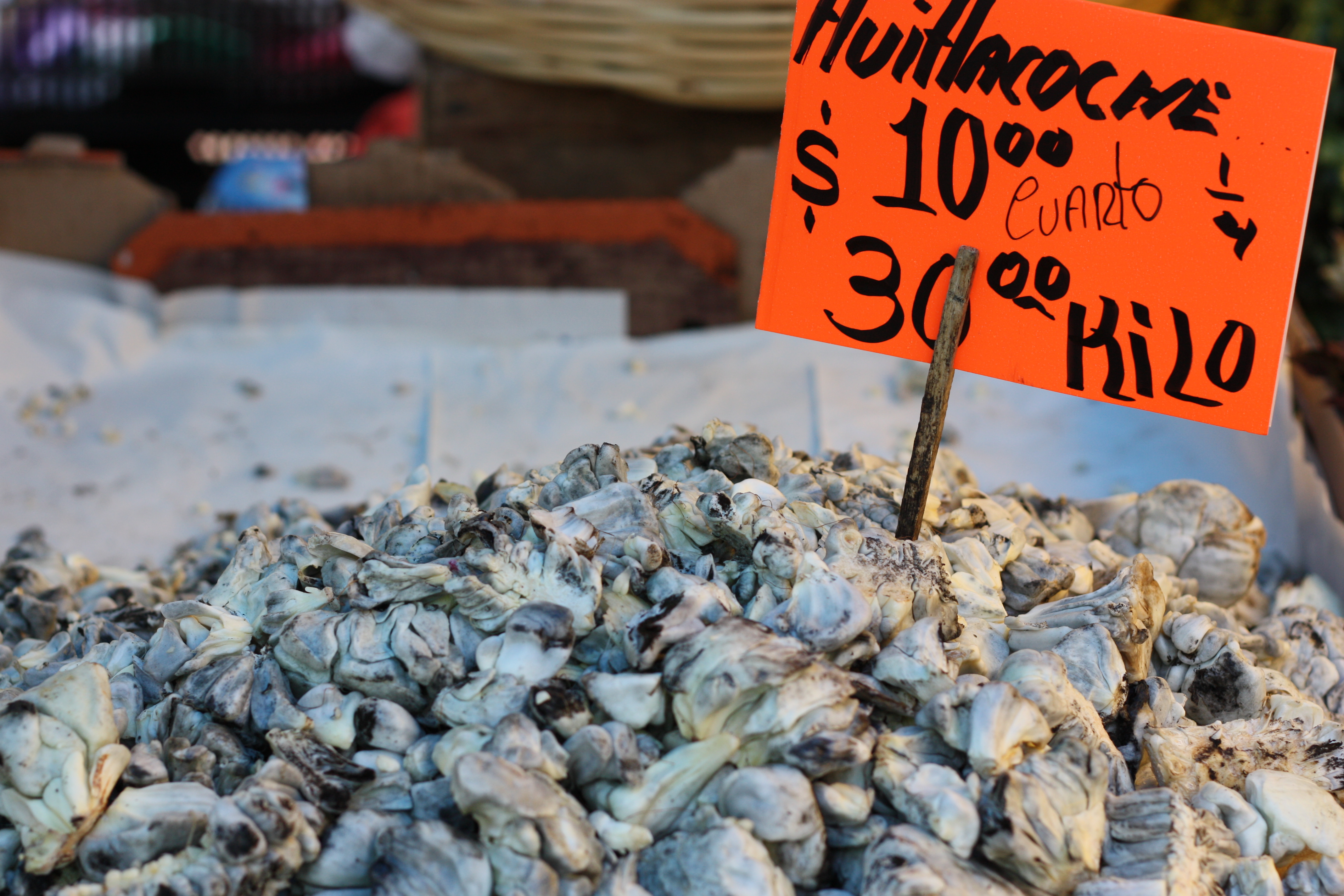
While in Xochimilco a few weekends ago, I picked up some fresh huitlacoche from a stand outside the market. Huitlacoche means “corn smut” in English (ha!), and it’s a fungus that grows on corn in blue-black, mushroomy clumps. People like to call huitlacoche “the Mexican truffle,” but I’m not entirely sure how true that is, given that corn smut is pretty cheap and eaten by the mouthful, while truffles are insanely expensive and shaved onto fancy pasta dishes. Anyway.

I’ve had huitlacoche quesadillas at markets in Mexico City, and to be completely honest, I haven’t always liked them. Sometimes they have an intensely earthy taste, like mushrooms on steroids. And they can be very slimy. The good news is that huitlacoche is actually packed with vitamins, according to a recent Associated Press report. It has the same types of soluble fibers as oatmeal, the same ones that have been found to lower cholesterol.

I had never bought fresh huitlacoche, because I wasn’t totally in love with the taste. But they looked so pretty sitting on the Xochimilco tabletop. They had this kind of iridescent bluish color, and they were these round, spongey tufts. I just wanted to touch them. Ruth, ever my culinary door-opener, told me huitlacoche was easy to cook — just mix it with some onion, corn kernels and chicken stock, and simmer for about 20 minutes.

So that’s exactly what I did.

And Ruth was right — it was easy.

By the way, there are lots of debates going on right now about whether “fast and easy” is the death knell of American culinary culture. I tend to believe that fast and easy shouldn’t be the top priority in the kitchen; the most important rule is to cook with fresh ingredients. So yes, this dish was fast, but my first rule was met: I had fresh huitlacoche and fresh corn.

I heated some oil in a skillet, and then added the onion, smut, corn kernels and stock. Simmered everything for about 30 minutes, until the plump bits of huitlacoche had deflated a bit and turned black and slimy. Added more stock whenever the mixture looked too dry.

It looked like of like a pile of shredded, motor-oil soaked rags when it was done. (Oily rags dotted with yellow corn.) But the taste was unlike any other huitlacoche I’ve tried. It was only delicately earthy, not knock-you-over-the-head earthy. Moreover, combined with the cheese, it was almost decadent — a soft, cheesy pile of vegetables, whispering of mushrooms and corn. Gave some to Crayton for lunch two days in a row — a rarity for me, because I like to mix it up — and he loved it.

Huitlacoche is apparently very abundant in Mexico’s rainy season; for more recipe ideas, check out the wonderful Karen Hursh Graber at MexConnect. My simple little recipe is below. This is great as a light dinner, or as an appetizer.
…

Read More

Filed Under: Recipes Tagged With: cheese, huitlacoche, quesadillas

Mexican “sopa” with spinach and panela cheese

April 22, 2010 by Lesley Tellez

“Sopa” technically means soup in Spanish, but in Mexico there are two types: sopa seca, which often refers to dry rice or noodles, and sopa aguada, which has a traditional, soupy base.

My mom made the noodle sopa a lot when I was a kid. She’d fried conch shell noodles and onion until they were a deep golden-brown, and then steam the crispy mixture in a mix of tomato puree and water. I always loved the moment when the water hit the hot pan. The pan would hiss loudly — sssssssss! — and I’d stare at the stove, wondering what had caused the dish to become so angry.

When made right, the noodles end up plump and al dente, with bits of tomato sauce clinging to their insides. I love this dish topped with sauteed spinach and crumbles of Mexican panela cheese.

Ingredients

1 200g package of dry conch shells (about 1 1/2 cups)
4 slices of onion
1 210g box tomato sauce, known in Mexico as tomato puree (about 1 cup)
3 cups water
6 to 8 cups spinach leaves
A hunk of panela cheese, or any other mild white cheese, crumbled
Salt

Directions

In a heavy-bottomed sauce pan, heat a few glugs of canola oil over medium-high heat, until shimmering. Add onion and noodles and cook, stirring almost constantly for 1 to 3 minutes so they don’t burn. Cook the onion-noodle mixture for about five minutes, or until the edges start to turn a deep golden brown. (It’s okay if the onion burns a little, my mom says.)

Working quickly, add your tomato sauce and water to the pan, and salt to taste. Stir to combine. Cover and lower the heat; simmer for about 15 minutes, or until noodles have soaked up all of their sauce. Feel free to take the lid off and peek on it once in awhile, if you’re unsure; it won’t hurt the dish.

When the pasta is done, rinse and spin dry the spinach leaves, and heat a small amount of olive oil in a skillet. When the oil is hot, add your leaves and sauté until they’re wilted but still a deep green color. Scrape the hot sautéed spinach into separate bowls, top with few scoops of sopa and the crumbled panela cheese. Serve warm.

Filed Under: Recipes Tagged With: cheese, Vegetarian

Cooking with Paula Lambert, and lots of cheese

March 31, 2010 by Lesley Tellez

Last week during my trip to Phoenix, I was lucky enough to attend a cooking class with Paula Lambert, a cheesemaker extraordinaire who lives in Dallas.

Paula started making her own cheese before it was cool. A trip to Italy inspired her, and in 1982, she opened up The Mozzarella Company in Dallas’s Deep Ellum neighborhood. Today she has an online shop, two cookbooks (one is called Cheese, Glorious Cheese), and accolades from The James Beard Foundation and national food magazines.

I’d heard of her when I lived in Dallas. In the same room with her, though, I was kicking myself for not visiting her shop more often. She’s funny, smart and charismatic. She really doesn’t seem to notice that she’s a big-deal cheesemaker, and you’re a home cook who doesn’t even know how to pronounce “marscapone.”

Anyway, the cooking class, no big surprise, focused on cheese. It was held at the Phoenix home of Barbara Fenzl, a chef who offers cooking classes under the name Les Gourmettes Cooking School. Each class is small and intimate, conducted in Fenzl’s kitchen.

My mother-in-law is a frequent guest at Fenzl’s classes, and she’s the one who brought me along. About a dozen of us sat in chairs in the breakfast nook while Paula prepared the cheese-centric menu.

First up was warmed goat cheese with sun-dried tomato coulis…

Then pea soup with mint and marscapone….

And poached salmon with feta mayonnaise, served with arugula salad with fennel, orange and ricotta salata.

Finally, for dessert, a deliciously messy angel-food marscapone berry trifle.

I didn’t take any pictures while she was cooking, because I felt conspicuous. (The whole “approaching strangers with my camera” fear reared its head.) The photos above came afterward, when we ate everything in Barbara’s dining room.

Each dish was delicious, but I especially loved the salad. Fennel is still pretty unfamiliar to me, and its delicate licorice taste matched really well with the bright citrus. The goat cheese appetizer was great too, and so simple — a warmed spoonful of goat cheese, smeared on bread with a tangy tomato sauce. (Think I may use slow-roasted tomatoes instead, seeing as how sun-dried aren’t carried at my local supermarket. Or maybe… tomatillos?)

Paula gave me permission to reprint the recipes below, so here they are, after the jump.

…

Read More

Filed Under: Reflections Tagged With: cheese

An American hamburger in Mexico

July 27, 2009 by Lesley Tellez

Our homemade, American-style burger

Ever since our new grill finally started working — did I tell you? Our grill WORKS! — we’ve been testing it out, with dumb grins on our faces. Last week we grilled pork ribs and mango slices. Yesterday we invited friends over and decided to make hamburgers. Thick ones. With (hold your breath)… homemade hamburger buns.

In my cooking control-freak mind, we could not attempt the perfect burger (that’s what our new grill was meant for, right?) without having the perfect bun. And so my body woke itself up on Sunday at 7 a.m., because even though I’d gone to bed at midnight the night before, and drank several glasses of wine that day, and therefore needed more sleep dammit — well, my internal clock was set to buns. Sprinkled on top with sesame seeds.

Yesterday morning, with light barely coming through the window, I whisked and kneaded and slapped the dough. I used a dough scraper to create eight little mounds, and then arranged them on a baking sheet. By 9:45 a.m., just in time for me to take a cab to Condesa to eat carnitas breakfast tacos (yes, this is the life I lead), the rolls had just come out of the oven. I cut one in half and tasted it just before walking out the door. Fabulous.

Crayton was in charge of the meat. He bought some ground beef at the tianguis, and used The New York Times’ recent burger recipe. It’s pretty simple: form the burgers into four-by-one inch rounds, refrigerate them, season them, then plop them on the grill. We’d bought a block of extra sharp cheddar at City Market, so when the burgers were just about ready, we covered ’em in cheese. And toasted those buns.

A few slathers of lime-flavored mayonnaise later, and some sliced beefsteak tomato and a few sheathes of iceberg lettuce, and we had a big ol’, very American burger. (Slightly lopsided, but that’s okay. We’re novices.)

We served the burgers with cold chayote salad in a roasted garlic vinaigrette, and spicy sweet potato fries. Dessert was leftover peach ice cream and tuna roja ice, which was just about the prettiest color nieve I’ve ever seen:

Red tuna-fruit ice... isn't it brilliant?

Recipes below, if you want to attempt at home. I’m calling it “An American Cookout in Mexico.” And I’m already thinking of how to make the burgers better. Next time we’re doing homemade mayo, y’all. Oooh, or maybe a choice of homemade mayos. Chipotle mayo. Chile morita mayo. Cilantro mayo…
…

Read More

Filed Under: Expat Life, Recipes Tagged With: cheese, High altitude baking

Next Page »

Primary Sidebar

Who is Mija?


Mija is Lesley Téllez, a writer, mom, and culinary entrepreneur in New York City. I lived in Mexico City for four years, which cemented my deep love for Mexican food and culture. I'm currently the owner/operator of the top-rated tourism company Eat Mexico. I also wrote the cookbook Eat Mexico: Recipes from Mexico City's Streets, Markets & Fondas.

Search this site

Buy My Book On Amazon

Eat Mexico by Lesley Tellez

Get The Mija Chronicles in your inbox

Enter your email address:

Delivered by FeedBurner

Read my old posts

Copyright © 2026 · Foodie Pro & The Genesis Framework